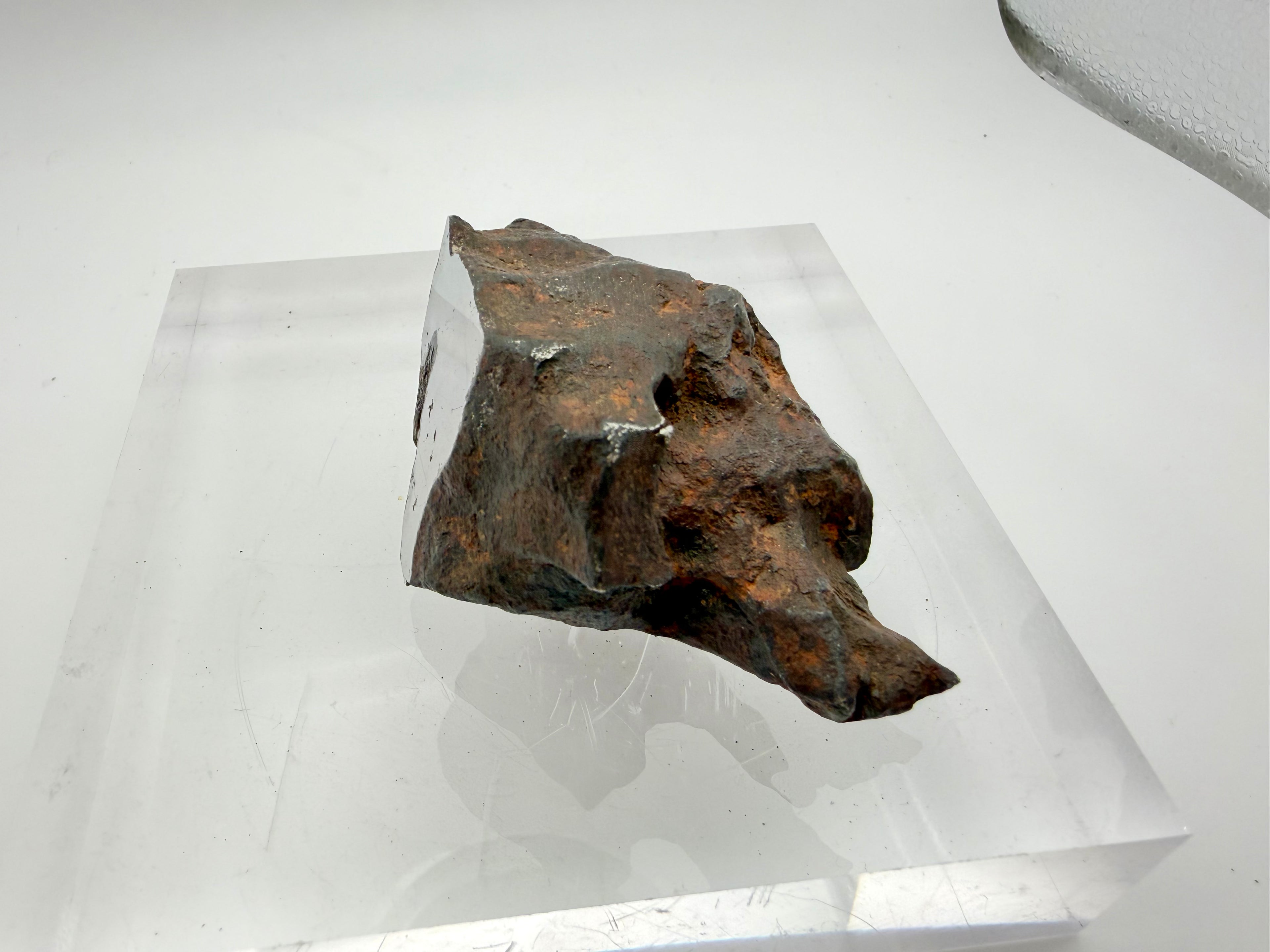
Iron Meteorites
Iron meteorites are metallic remnants of asteroid cores composed primarily of iron-nickel alloy. These specimens formed through slow cooling in space and often display distinctive Widmanstätten patterns when etched.

Iron meteorites are metallic remnants of asteroid cores composed primarily of iron-nickel alloy. These specimens formed through slow cooling in space and often display distinctive Widmanstätten patterns when etched.
Iron meteorites are the exposed cores of ancient asteroids: dense, metallic objects that formed when small planetary bodies melted, differentiated, and were later shattered by collisions. Every iron meteorite in this collection is a direct sample of an asteroid interior, typically 4.5 billion years old. Unless noted in the listing, each specimen is authenticated through its Meteoritical Bulletin classification.
Each specimen ships with its Meteoritical Bulletin classification and, where useful, a polished and etched face that confirms the Widmanstatten pattern. Learn how the registry works on our Meteoritical Bulletin explained page, and see broader identification tips on how to tell if a meteorite is real.
Iron meteorites are composed primarily of iron-nickel alloy (the minerals kamacite and taenite) and are immediately recognizable by their metallic weight and density. Most contain enough metal to attract a strong magnet.
When cut, polished, and etched with dilute acid, the majority reveal the Widmanstatten pattern: an interlocking geometric crystal structure of kamacite and taenite bands that formed over millions of years of slow cooling deep inside an asteroid. This pattern is impossible to replicate in a lab, so it remains the definitive visual proof of iron meteorite origin. Read more: Widmanstatten pattern explained.
Etched slices show the full Widmanstatten pattern and are the most popular display format.
Polished slices highlight metallic luster without acid etching and are ideal for jewelry blanks or contrasting display pieces.
Complete individuals preserve natural regmaglypts and fusion crust, recording the meteorite atmospheric passage.
End cuts combine an exterior face with an interior polished face, offering both surface and structural views.
Structurally, iron meteorites are grouped by bandwidth as hexahedrites, octahedrites (coarsest through finest), and ataxites. Chemical groups such as IAB, IIAB, IIIAB, IVA, and IVB reflect parent body chemistry and are recorded in each specimen Meteoritical Bulletin entry.
Are all iron meteorites magnetic? Yes. Iron meteorites are strongly ferromagnetic due to their iron-nickel composition and will firmly attract a strong neodymium magnet. Read more: Are meteorites magnetic?
What is the Widmanstatten pattern? It is an interlocking crystal structure of kamacite and taenite that forms only during millions of years of slow cooling inside an asteroid. It cannot be faked and is definitive proof of iron meteorite origin. Read more: Widmanstatten pattern explained.
Do iron meteorites rust? Yes. Metallic iron oxidizes when exposed to moisture. Store specimens with silica gel desiccant, and etched faces benefit from a thin lacquer coating. Read more: Do meteorites rust?
How should I store an iron meteorite? Keep specimens in a low-humidity environment, ideally inside a sealed display case with silica gel. Avoid bare-hand contact, since skin oils accelerate corrosion. Read more: How to care for and store a meteorite.
Are these specimens authenticated? Unless noted in the listing title or description, specimens in this collection are Meteoritical Bulletin classified with a direct link to the official record. Every purchase ships with a Treasure Coast Meteorite Co. certificate of authenticity.
See also: Muonionalusta · Stony-iron meteorites · Stony meteorites · Widmanstatten pattern explained · Types of meteorites