
Wissen · Meteoritenidentifikation
Ein Meteorit ist ein Gestein von einem anderen Himmelskörper. Ein Tektit ist ein Stück Erde, das durch einen Meteoriteneinschlag geschmolzen und hunderte oder tausende Kilometer weit geschleudert wurde, bevor es zu Glas erstarrte. Beide verdanken ihre Existenz etwas, das aus dem Weltraum kam, weshalb sie so oft verwechselt werden. Nur einer von beiden kam aus dem Weltraum.
Die kurze Antwort
Tektite, Moldavit, Libysches Wüstenglas, Darwin-Glas und andere Einschlaggläser sind keine Meteoriten. Sie sind terrestrisches Gestein, das durch die Energie eines großen Einschlags geschmolzen wurde. Das Objekt, das einschlug, war ein Meteoroid oder Asteroid, aber fast nichts davon ist im Glas erhalten geblieben. Was Sie in der Hand halten, ist Erde.
Die in der Meteoritenforschung verwendete wissenschaftliche Definition klärt die Frage. Rubin und Grossman (2010) definieren einen Meteoriten als ein natürliches festes Objekt, das von einem Himmelskörper stammt, auf natürliche Weise aus dessen vorherrschendem Gravitationseinfluss herausgetragen wurde und später mit einem anderen Körper kollidierte. Ein Tektit wird von der Erde geschleudert und fällt wieder auf die Erde zurück, ohne jemals die Schwerkraft der Erde zu verlassen, daher erfüllt er die Kriterien nicht.
Meteoriten und Tektite im Vergleich
Ein praktischer Hinweis: Meteoriten selbst sind nicht immer magnetisch, und nicht jeder dunkle, schwere Stein ist ein Meteorit. Zu den Feldtests, die funktionieren und die nicht, siehe wie kann man erkennen, ob ein Meteorit echt ist und Ich glaube, ich habe einen Meteoriten gefunden, was nun.
Tektit, Einschlagglas, Impactit: die Begriffe
Impactit ist der Oberbegriff für jedes Gestein, das durch einen Einschlag entstanden oder verändert wurde. Dazu gehören Einschlagbrekzien wie Suevit, Einschlagschmelzgestein und Einschlagglas.
Einschlagglas ist Glas, das aus durch einen Einschlag geschmolzenem Zielgestein entsteht. Der Großteil davon wird im oder in der Nähe des Kraters oder in einem begrenzten Gebiet um den Schmelzort gefunden.
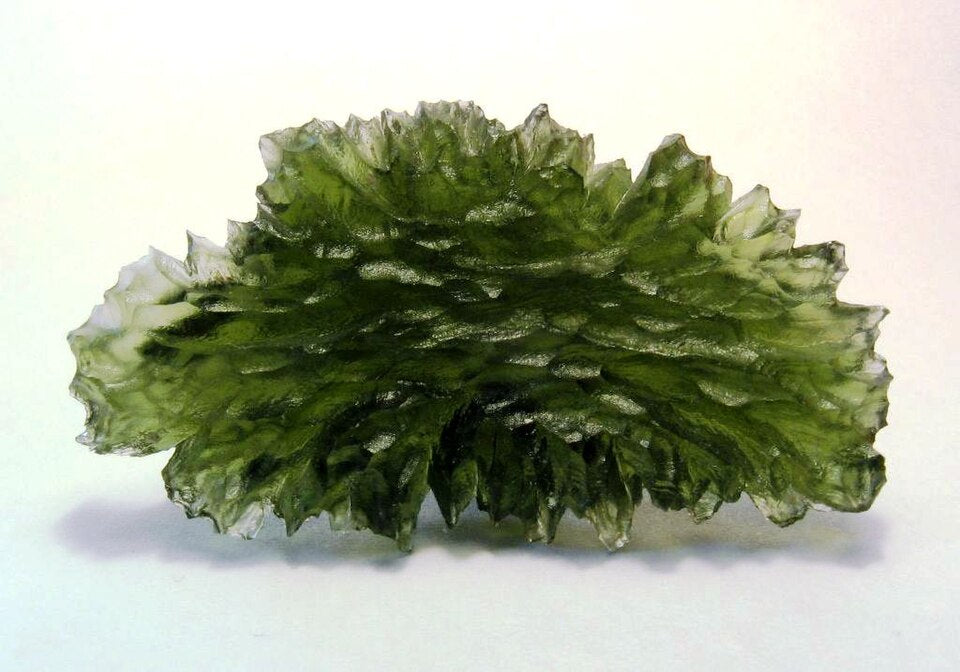
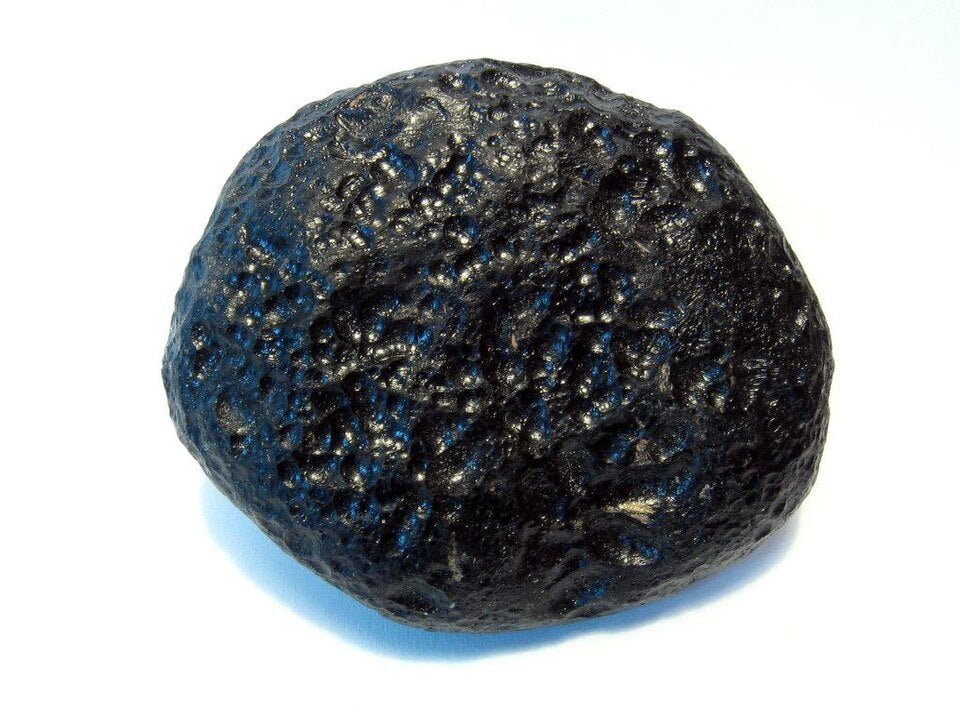
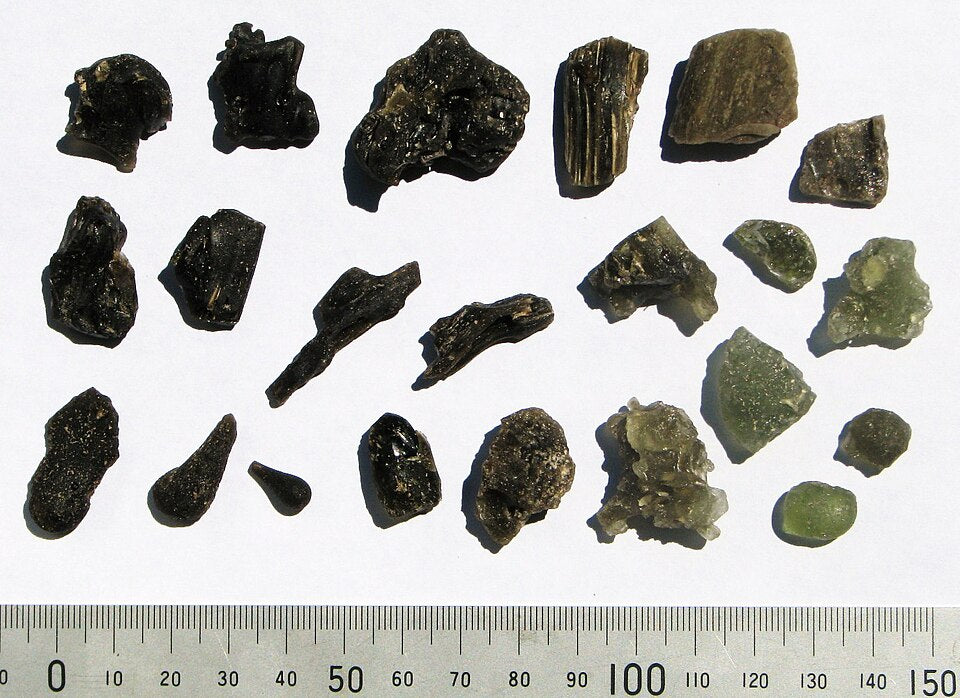
Tektite sind eine spezielle Art von Einschlagglas. Sie sind distale Ejekta: geschmolzenes Oberflächengestein, das weit vom Krater weggeschleudert, während des Fluges abgekühlt und über weite Gebiete gefunden wird, die als Streufelder bezeichnet werden. Sie sind innerhalb jedes Feldes chemisch einheitlich, extrem trocken und tragen nur einen sehr geringen extraterrestrischen Anteil (Koeberl et al. 2022).
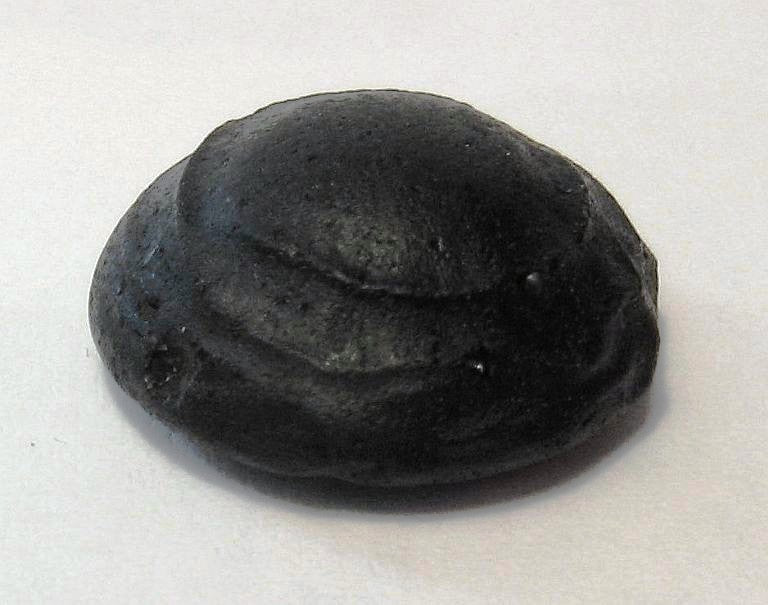
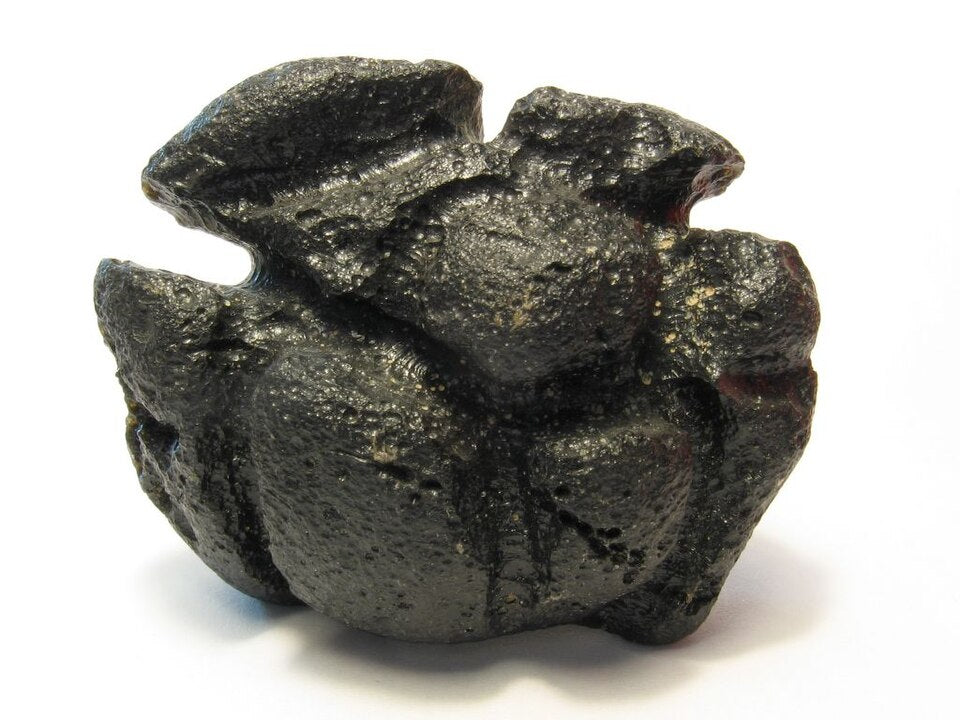
Nach diesen Definitionen sind Moldavit und Australite Tektite. Darwin-Glas ist Einschlagglas, das um seinen wahrscheinlichen Quellkrater gefunden wird, und Libysches Wüstenglas wird im Allgemeinen als Einschlagglas und nicht als echter Tektit beschrieben. Sammler fassen sie oft alle zusammen als „Tektite“, und Händler ebenfalls. Die Unterscheidung ist es wert, sie zu kennen, denn sie verrät Ihnen, wie weit das Material gereist ist und wie es entstanden ist.
Die bekannten Tektit-Streufelder
Über Jahrzehnte hinweg wurden in der Literatur vier Tektit-Streufelder anerkannt. Ein fünftes wurde 2021 vorgeschlagen. Drei der vier klassischen Felder sind fest mit einem bekannten Quellkrater verbunden; das größte nicht.
| Streufeld | Tektite | Alter | Quellkrater |
|---|---|---|---|
| Australasiatisch | Australite, Indochinite, Philippinite, Muong Nong Typ | ~790.000 Jahre | Nicht bestätigt. Bolaven-Plateau, Laos, vorgeschlagen (Sieh et al. 2020) und umstritten |
| Mitteleuropäisch | Moldavite | ~14,8 Mio. Jahre | Rieskrater, Deutschland |
| Elfenbeinküste | Ivorite | ~1,07 Mio. Jahre | Bosumtwi-Krater, Ghana |
| Nordamerikanisch | Bediasite, Georgiaite | ~35 Mio. Jahre | Chesapeake-Bay-Einschlagstruktur, Virginia |
| Belize (vorgeschlagen, 2021) | Belizite | ~804.000 Jahre | Pantasma-Krater, Nicaragua (Rochette et al. 2021) |
Die Alter sind aus den unten im Forschungsbereich zitierten Studien gerundet. Das Australasiatische Feld ist das jüngste und größte der klassischen vier und erstreckt sich über etwa ein Zehntel der Erdoberfläche (Melosh 2020).
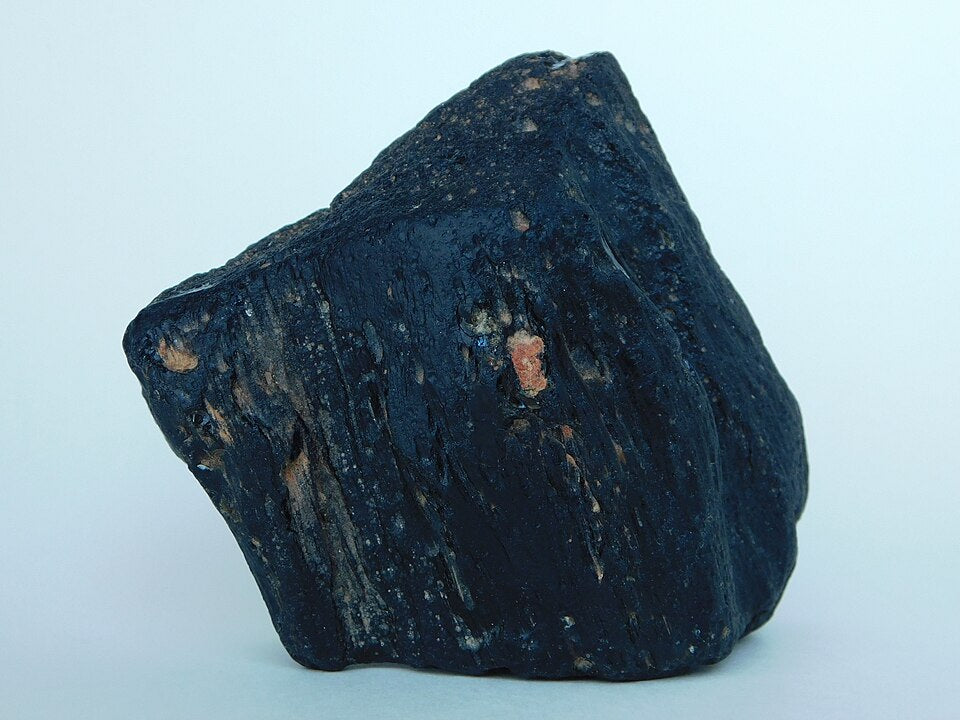
Zwei Sammler von Einschlagglas fragen nach
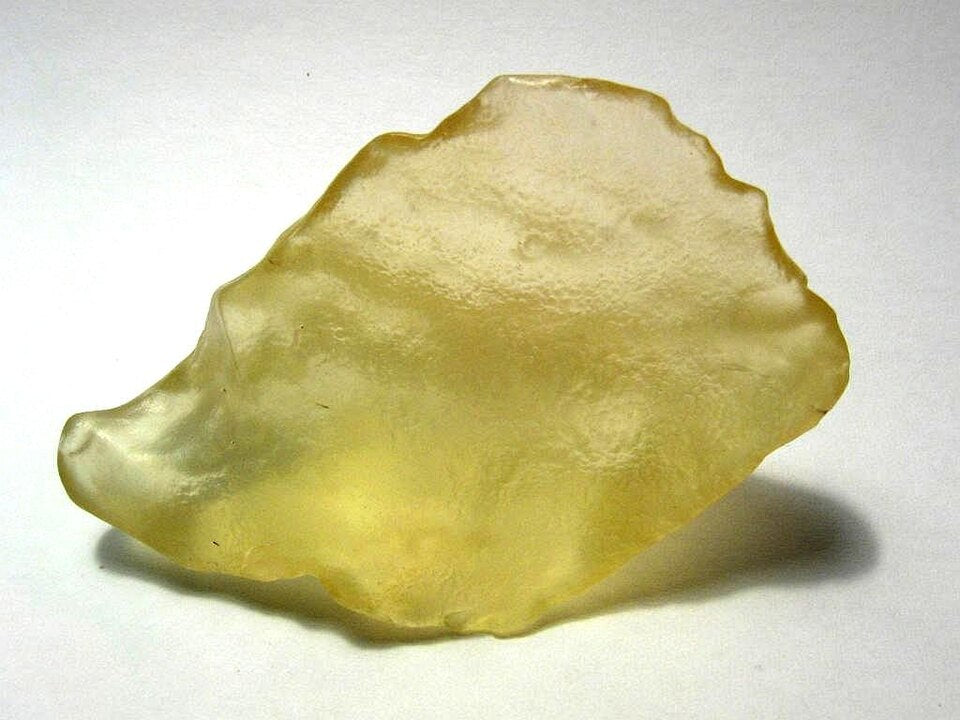
Libysches Wüstenglas ist nahezu reines Silikatglas, gelb bis grün und oft durchscheinend, das über Tausende Quadratkilometer des Großen Sandmeeres im westlichen Ägypten nahe der libyschen Grenze gefunden wird. Trotz des Namens liegt das Streufeld in Ägypten. Es entstand vor etwa 29 Millionen Jahren. Sein Quellkrater wurde nie identifiziert, und ob es durch einen Bodeneinschlag oder eine sehr große Luftexplosion entstand, wurde jahrzehntelang debattiert. Der Forschungsbereich behandelt diese Debatte ausführlich.
Darwin-Glas ist Einschlagglas aus West-Tasmanien, das über etwa 400 Quadratkilometer um den Darwin-Krater gefunden wird, eine 1,2 km große Struktur, die der wahrscheinliche, aber unbestätigte Ursprung ist. Es wird auf etwa 816.000 Jahre vor heute datiert (Lo et al. 2002).
Die Geschichte
Einschlagglas wird schon viel länger gesammelt, als Meteoriten verstanden wurden.
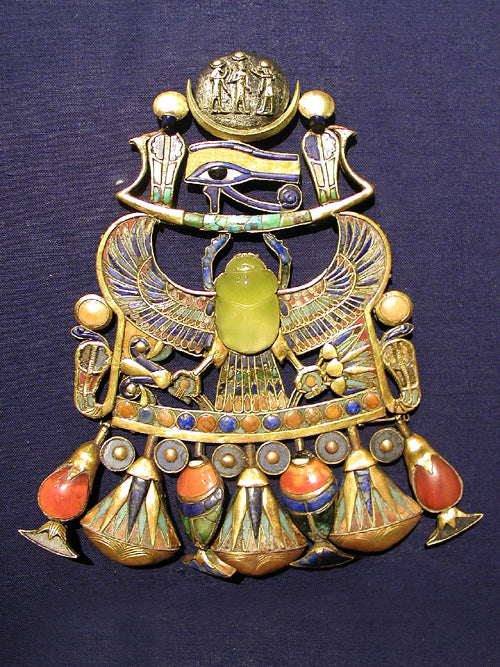
Ein Skarabäus eines Pharaos. Einer der von Howard Carter 1922 in der Grabstätte Tutanchamuns gefundenen Brustschmuckstücke hat in der Mitte einen aus gelblich-grünem Glas geschnitzten Skarabäus. Er wurde bis 1998 für Chalcedon gehalten, als er als Libysches Wüstenglas identifiziert wurde. Das Glasfeld selbst war bereits 1850 vom französischen Konsul Fulgence Fresnel erwähnt worden und wurde 1932 von Patricks Claytons Expedition wissenschaftlich erforscht (Simon 2025).
Moldavit in der Steinzeit. Moldavite wurden in Willendorf, dem österreichischen Fundort der Venus von Willendorf, gefunden, was darauf hindeutet, dass Menschen schon vor Zehntausenden von Jahren dieses grüne Glas sammelten (Melosh 2020, ein Kommentar, der die Verbindung beiläufig erwähnt).
Darwin-Glas in Tasmanien. Die Aborigines von Tasmanien fanden und handelten Darwin-Glas tausende Jahre bevor die Europäer es Mitte des 19. Jahrhunderts dokumentierten, so Lo und Kollegen, unter Verweis auf Storey (1987), in einem Projektbericht der National Taiwan University über ihre Datierung von Darwin-Glas.
Quellen: Simon, R. (2025), The curious history of Tutankhamun's scarab, Aegyptus et Pannonia IX, S. 205 bis 266. Melosh (2020) wie unten zitiert.
Was die Forschung berichtet
Tektite sind keine Meteoriten, daher hat das Meteoritical Bulletin keine Klassifizierung, die es zitieren könnte. Die untenstehende Forschung stammt aus begutachteten Fachzeitschriften und, wo gekennzeichnet, aus Konferenzabstrakturen. Die Erkenntnisse stammen aus den eigenen Proben und Methoden der Autoren und werden so wiedergegeben, wie die Studien sie darstellen. Wo Studien sich widersprechen, werden beide Seiten dargestellt.
Tektite sind geschmolzenes terrestrisches Gestein
Koeberl, C. (1992). Tektite origin by hypervelocity asteroidal or cometary impact: The quest for the source craters. Konferenzabstrakt, NASA Technical Reports Server. Koeberl fasst den Konsens zusammen, dass Tektite durch das Schmelzen und Abschrecken von terrestrischem Gestein bei einem Einschlag mit Hypergeschwindigkeit entstanden sind und dass ihre Chemie der oberen Kontinentalrinde entspricht. Er beschreibt auch die aerodynamische Ablation von Australiten, die teilweise wieder aufgeschmolzen wurden, als sie nach dem Auswurf wieder in die Atmosphäre eintraten.
Über weite Teile des zwanzigsten Jahrhunderts wurde ein Mondursprung ernsthaft diskutiert, vor allem von John O'Keefe der NASA. Geochemische und isotopische Arbeiten haben seitdem die Zusammensetzungen von Tektiten mit terrestrischen Quellgesteinen in Verbindung gebracht, und die Mondhypothese wird in der Fachwelt nicht mehr vertreten.
Der Wassergehalt trennt Tektite von vulkanischem Glas
Beran, A. und Koeberl, C. (1997). Water in tektites and impact glasses by Fourier-transformed infrared spectrometry. Meteoritics and Planetary Science 32, 211 bis 216. Sie untersuchten 26 Tektite aus allen vier klassischen Streufeldern und fanden Wassergehalte von 0,002 bis 0,030 Gewichtsprozent, wobei Tektite von der Elfenbeinküste die trockensten waren. Einschlaggläser waren etwas feuchter; Libysches Wüstenglas lag bei etwa 0,11 Gewichtsprozent. Beide Glasarten sind viel trockener als vulkanisches Glas, was die Autoren als guten Beweis für einen Einschlagursprung ansehen.
Moldavite und der Rieskrater
Schmieder, M., Kennedy, T., Jourdan, F., Buchner, E. and Reimold, W.U. (2018). A high-precision 40Ar/39Ar age for the Nordlinger Ries impact crater, Germany, and implications for the accurate dating of terrestrial impact events. Geochimica et Cosmochimica Acta 220, 146 to 157. Argon-argon dating of moldavites gave a weighted mean age of 14.808 million years, with an uncertainty of 0.038 million years including all external errors, which the authors take as the age of the Ries impact.
The date was challenged. Rocholl and colleagues (2018, comment in Geochimica et Cosmochimica Acta) argued that paleomagnetic evidence allows only impact ages of about 14.87 or 14.61 million years. Schmieder and colleagues replied in the same journal (volume 238, pages 602 to 605) that their age agrees with the recalibrated time scale and questioned the paleomagnetic constraint. All parties agree on roughly 14.6 to 14.9 million years; the dispute is over which hundred thousand years.
The missing Australasian crater
Sieh, K. and colleagues (2020). Australasian impact crater buried under the Bolaven volcanic field, Southern Laos. PNAS 117, 1346 to 1353. The authors present four lines of evidence that the source crater lies beneath younger lava flows of the Bolaven Plateau: tektite chemistry, argon dates on lavas above and around the site, a gravity anomaly consistent with a buried crater of roughly 17 by 13 km, and a breccia outcrop they interpret as proximal ejecta. A follow-up (Sieh et al. 2023, PNAS 120) described that breccia in detail and dated the tektite-forming impact to about 789,000 years ago.
In an accompanying commentary, H.J. Melosh (2020, PNAS 117) called Bolaven the best candidate yet, while noting that not everyone was convinced and that drilling would be needed to prove it. Mizera (2022, Meteoritics and Planetary Science 57) rejected the proposal, arguing that a sandstone and basalt mixture is geochemically unsuitable as the tektite source, and Mizera and Strunga (2024, PNAS 121) disputed the proposed ejecta; Sieh and colleagues replied in the same issue that the ejecta deposit essentially settles the case. Mizera and colleagues have instead proposed the Alashan Desert of northwest China. As of November 2026 no Australasian source crater has been confirmed.
Bosumtwi and the Ivory Coast tektites
Koeberl, C. and colleagues (1998). Petrology and geochemistry of target rocks from the Bosumtwi impact structure, Ghana, and comparison with Ivory Coast tektites. Geochimica et Cosmochimica Acta 62, 2179 to 2196. The study found that the composition of the Ivory Coast tektites can be reproduced from a mixture of the crater's local rocks. Together with matching ages, this ties the tektites to the 10.5 km, 1.07 million year old Bosumtwi crater. Osmium isotope work by Koeberl and Shirey (1993), as summarized in the Bosumtwi drilling project overview (Koeberl et al. 2007), detected a small meteoritic component in the tektites.
Chesapeake Bay and the North American tektites
Deutsch, A. and Koeberl, C. (2006). Establishing the link between the Chesapeake Bay impact structure and the North American tektite strewn field: The Sr-Nd isotopic evidence. Meteoritics and Planetary Science 41, 689 to 703. Strontium and neodymium isotopes in bediasites matched the Chesapeake Bay target rocks and excluded Russia's Popigai crater, which has an age within error of the tektites. The authors concluded Chesapeake Bay is clearly the source crater.
A proposed fifth strewn field in Belize
Rochette, P. and colleagues (2021). Impact glasses from Belize represent tektites from the Pleistocene Pantasma impact crater in Nicaragua. Communications Earth and Environment 2, 94. Glasses found in Belize share an age of about 804,000 years and consistent chemistry and isotopes with the 14 km Pantasma crater, 530 km away. The authors propose them as a previously unrecognized tektite strewn field.
Koeberl and colleagues (2022, Geochimica et Cosmochimica Acta) studied 18 Belize glasses and confirmed an impact origin from their petrography and low water content. They found the chemistry typical of Central American volcanic arc rocks and clearly different from the Australasian tektites.
Libyan Desert Glass: impact or airburst
For decades the leading alternative to a ground impact was a very large, low altitude airburst. Boslough and Crawford (2008, International Journal of Impact Engineering 35) used numerical simulations to show that a large airburst could melt surface material, and proposed Libyan Desert Glass and the layered Muong Nong tektites as possible examples. Kramers and colleagues (2013, Earth and Planetary Science Letters 382) described "Hypatia," an unusual diamond-bearing stone from the glass field, and suggested it may be a fragment of a comet whose airburst formed the glass.
Cavosie, A.J. and Koeberl, C. (2019). Overestimation of threat from 100 Mt-class airbursts? High-pressure evidence from zircon in Libyan Desert Glass. Geology 47, 609 to 612. Zircon grains in all seven samples studied preserved crystal orientations that form only on reversion from reidite, a high-pressure mineral that requires shock pressures of about 30 GPa. Airbursts do not generate shock of that kind at the ground. The authors conclude a crater-forming impact was involved.
The source crater is still unknown. El-Baz and Ghoneim (2007, International Journal of Remote Sensing 28) identified the 31 km Kebira structure on the Egypt and Libya border from satellite data and suggested it as the source. It has not been confirmed as an impact structure by field study. Longinelli and colleagues (2011, Meteoritics and Planetary Science 46) found that oxygen isotopes of sandstone from the Kebira area differ strongly from the glass and ruled that sandstone out as the source material. Sighinolfi and colleagues (2020, Meteoritics and Planetary Science) pointed instead to weathering products of sandstones that include Gilf Kebir rocks as the most likely melted material. The melting site remains an open question.
Darwin glass
Lo, C.H., Howard, K.T., Chung, S.L. and Meffre, S. (2002). Laser fusion argon-40/argon-39 ages of Darwin impact glass. Meteoritics and Planetary Science 37, 1555 to 1562. They dated Darwin glass to a weighted mean of 816,000 years, statistically indistinguishable from the Australasian tektites. Because of differences in composition and texture, and its distance from the presumed Australasian source area, they consider a separate impact during the same period more likely.
Definitions and densities
Rubin, A.E. and Grossman, J.N. (2010). Meteorite and meteoroid: New comprehensive definitions. Meteoritics and Planetary Science 45, 117 to 125. Source of the definition of meteorite used at the top of this page.
Britt, D.T. and Consolmagno, G.J. (2003). Stony meteorite porosities and densities: A review of the data through 2001. Meteoritics and Planetary Science 38, 1161 to 1180. Compiling 925 samples of 454 meteorites, they found most stony meteorites have densities of about 3 to 4 g/cm3, lower only for some volatile-rich carbonaceous meteorites and higher for stony irons.
Buying tektites and impact glass
Because tektites have no Meteoritical Bulletin entry, the record that protects you is locality and a seller who describes the material correctly. A few points worth applying to any listing:
- The listing should call it a tektite, impact glass or impactite, never a meteorite.
- The type should match its strewn field. Moldavite comes from the Central European field, centered on southern Bohemia and Moravia in the Czech Republic. Libyan Desert Glass comes from western Egypt.
- Manufactured green glass is sold as moldavite in the gem and crystal trade. Buy from a seller who states the locality and will stand behind it.
- Claims about energy, healing or extraterrestrial power are marketing, not mineralogy.
Treasure Coast Meteorite Co. lists tektites and impact glass in their own collection, separate from meteorites, and describes them as terrestrial impact material. Our standards for authenticity are set out on the authenticity and certificates page.
Frequently asked questions
- Is a tektite a meteorite?
- No. A tektite is natural glass made from Earth's own surface rock, melted by the impact of a large meteoroid or asteroid and thrown across a wide area before it cooled. A meteorite is a rock that came from another body, such as an asteroid, the Moon or Mars. Tektites are related to meteorites by cause, not by origin.
- Is moldavite a meteorite?
- No. Moldavite is a tektite from the Central European strewn field, formed when an impact created the Ries crater in southern Germany about 14.8 million years ago. Molten rock was thrown east and landed mainly in what is now the Czech Republic. It is melted Earth rock, not material from space.
- Is Libyan Desert Glass a meteorite or a tektite?
- Neither, strictly. Libyan Desert Glass is an impact glass: nearly pure silica glass formed about 29 million years ago when surface material in what is now western Egypt melted during a large impact. It is often grouped with tektites in the trade, but researchers generally describe it as impact glass rather than a true tektite. Its source crater has not been found.
- Do tektites contain any material from space?
- Only a trace. Osmium isotope studies have found a very small meteoritic component in some tektites, including the Ivory Coast tektites. The glass itself is overwhelmingly terrestrial rock.
- How can I tell a tektite from a meteorite at home?
- Look at a broken or chipped surface. Tektites break with a smooth, shell-shaped glassy fracture and often show translucence on thin edges. Stony meteorites are granular inside and many show metal flecks. Tektites also feel lighter for their size and do not respond to an ordinary hand magnet, while most meteorites do. None of these checks is proof on its own.
- How can I tell a tektite from obsidian?
- Both are natural glass, but tektites are far drier. Laboratory measurements put tektites below 0.03 weight percent water, much lower than volcanic glass. Measuring that requires a lab. In practice, locality is the strongest clue: each tektite type comes from a mapped strewn field, while obsidian comes from volcanic regions.
- Are tektites listed in the Meteoritical Bulletin?
- No. The Meteoritical Bulletin Database records meteorites. Tektites and impact glasses are terrestrial and are not entered there, so a tektite cannot carry a Meteoritical Bulletin classification.
- Does Treasure Coast Meteorite Co. sell tektites?
- Yes. Tektites and impact glass are listed in their own tektites and impactites collection, described as terrestrial impact material and kept separate from our meteorites. Treasure Coast Meteorite Co. is an IMCA member, #3323.


